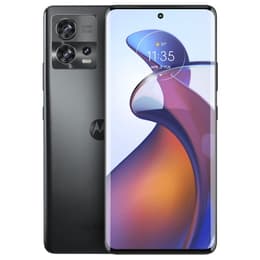



Motorola Edge 30 Fusion vs Xiaomi Redmi Note 11

Motorola Edge 30 Fusion
Od

Cena za repasovaný kus:172,00 €

V porovnaní s 555,00 € za nový

Zobraziť možnosti
Xiaomi Redmi Note 11
Od

Cena za repasovaný kus:111,00 €

V porovnaní s 199,00 € za nový

Zobraziť možnosti

Hodnotenia

Motorola Edge 30 Fusion, released in September 2022, and Xiaomi Redmi Note 11, launched in January 2022, are both Android smartphones that cater to different user priorities. While the Edge 30 Fusion emphasizes a premium design and robust performance, the Redmi Note 11 focuses on a balanced user experience with strong battery life. Both devices run on the Android operating system, offering a range of features for daily use.

Výsledky

Odolnosť

The longevity of a smartphone is influenced by its build quality and the duration of software support it receives. These two devices offer different expectations in this regard.

  • Software Support: The Motorola Edge 30 Fusion typically receives two major Android OS updates and three years of security updates. It launched with Android 12 and has since received Android 13 and Android 14. The Xiaomi Redmi Note 11, launched with Android 11, generally receives two major OS updates and three to four years of security updates. However, some Redmi Note 11 models have already reached their end-of-life for security updates.
  • Build Materials: The Edge 30 Fusion features a glass front (Gorilla Glass 5) and back with an aluminum frame, offering a more premium feel and enhanced durability. The Redmi Note 11 uses Gorilla Glass 3 on the front, with a plastic back and frame, providing a more budget-friendly construction.
  • Practical Lifespan: Users prioritizing longer software support and a more robust physical build might find the Motorola Edge 30 Fusion to offer a slightly extended practical lifespan, especially concerning ongoing security patches.

Rok vydania

2022

2022

Kompatibilný/Kompatibilita s najnovšími aktualizáciami

Áno

Nie

Operačný systém

Android

Android

Sklopný

Nie

Nie

Výkon

Performance is a key differentiator, with each device offering capabilities suited to different usage patterns.

  • Processing Power: The Motorola Edge 30 Fusion is equipped with a processor that handles demanding applications and multitasking with notable responsiveness, making it well-suited for intensive gaming and heavy productivity tasks. The Xiaomi Redmi Note 11's processor is designed for efficient everyday use, smoothly managing common apps and general browsing, though it may show limitations with graphically intensive games or very heavy multitasking.
  • Memory and Storage: The Edge 30 Fusion offers higher RAM configurations, contributing to smoother transitions between multiple open applications. It also provides larger internal storage options. The Redmi Note 11 comes with more modest RAM and storage capacities, which are sufficient for typical smartphone usage.
  • Battery Behavior: The Edge 30 Fusion has a 4400 mAh battery, which users report can last a full day with moderate use, supported by fast charging capabilities. The Redmi Note 11 features a larger 5000 mAh battery, known for providing extended usage times, often lasting beyond a single day for many users.

Pamäť (GB)

8 GB

4 GB

Kvalita obrazovky

Both devices offer vibrant displays, but they differ in technology and refresh rate, impacting the visual experience.

  • Display Technology and Clarity: The Motorola Edge 30 Fusion features a P-OLED display with 1 billion colors, offering deep blacks and vibrant color reproduction. The Xiaomi Redmi Note 11 utilizes an AMOLED display, also providing rich colors and good contrast. Both have a Full HD+ resolution (1080 x 2400 pixels), ensuring sharp visuals for text and images.
  • Refresh Rate and Brightness: The Edge 30 Fusion boasts a 144Hz refresh rate, resulting in exceptionally smooth scrolling and animations, and a peak brightness of 1100 nits for good outdoor visibility. The Redmi Note 11 offers a 90Hz refresh rate, providing a smoother experience than standard 60Hz displays, and reaches a peak brightness of 1000 nits, which is also suitable for outdoor viewing.
  • Screen Size: The Edge 30 Fusion has a 6.55-inch display, while the Redmi Note 11 has a slightly smaller 6.43-inch screen.

Rozlíšenie

1080 x 2400

1080 x 2400

Typ obrazovky

P-OLED

AMOLED

Audiovizuálne

The camera systems on these smartphones offer different capabilities for capturing photos and videos.

  • Rear Camera System: The Motorola Edge 30 Fusion features a 50 MP main camera with optical image stabilization (OIS), a 13 MP ultrawide lens with macro capabilities, and a 2 MP depth sensor. The OIS on the main sensor aids in clearer low-light photos and more stable videos. The Xiaomi Redmi Note 11 includes a 50 MP main camera, an 8 MP ultrawide lens, a 2 MP macro lens, and a 2 MP depth sensor.
  • Photography Performance: The Edge 30 Fusion's main camera is noted for good detail and color accuracy in well-lit conditions, with decent low-light performance thanks to OIS. The Redmi Note 11's main camera performs well in good lighting, producing clean shots, but low-light performance can be less consistent, and the ultrawide and macro lenses are considered acceptable for casual use.
  • Video Recording and Audio: The Edge 30 Fusion supports video recording up to 8K at 30fps and 4K at 30fps with HDR10. The Redmi Note 11 is limited to 1080p at 30fps for video recording. Both phones offer stereo speakers, with the Edge 30 Fusion featuring Dolby Atmos support for an enhanced audio experience.
  • Front Camera: The Edge 30 Fusion has a 32 MP front camera, capable of capturing detailed selfies and 4K video. The Redmi Note 11 has a 13 MP front camera, suitable for everyday selfies and video calls.

Hlavný fotoaparát

50 megapixels

50 megapixels

Predná kamera

32 megapixels

13 megapixels

Rôzne

Beyond core features, several practical elements contribute to the overall user experience.

  • Connectivity: The Motorola Edge 30 Fusion supports 5G connectivity, Wi-Fi 6E, and Bluetooth 5.2, offering faster network speeds and more advanced wireless connections. The Xiaomi Redmi Note 11 supports 4G connectivity, Wi-Fi 5, and Bluetooth 5.0.
  • Ports and Sensors: The Edge 30 Fusion features a USB-C 3.1 port with DisplayPort support and an under-display optical fingerprint sensor. The Redmi Note 11 has a USB-C 2.0 port and retains a 3.5mm headphone jack, along with a side-mounted fingerprint sensor.
  • Design and Handling: The Edge 30 Fusion has a slim profile (7.45mm thick) and a lighter weight (168g), with a curved display that contributes to a comfortable in-hand feel. The Redmi Note 11 is slightly thicker (8.1mm) and heavier (179g), with a flatter design. Both devices have an IP52/IP53 rating for dust and splash resistance.

Hmotnosť

168 g

179 g

Veľkosť obrazovky

6,55

6.43

Sieť

5G

4G

Karta SIM

Duálna fyzická karta SIM

Duálna fyzická karta SIM

Blokovanie na operátora

Neblokovaný

Neblokovaný

User feedback on the Motorola Edge 30 Fusion often praises its premium build quality, smooth 144Hz display, and strong performance for its category. Common criticisms include its camera performance, which some users find inconsistent, particularly in challenging lighting, and the duration of software updates compared to some competitors. Users appreciate its fast charging and comfortable design.

For the Xiaomi Redmi Note 11, users frequently highlight its excellent AMOLED screen, impressive battery life, and loud stereo speakers as strong points. However, some users express concerns about the processor's performance for demanding tasks, the ultrawide camera's quality, and the software experience with MIUI. The lack of 4K video recording is also a noted limitation.

Users prioritizing a device with a high-refresh-rate display, robust processing power for demanding applications, and a premium build will find the Motorola Edge 30 Fusion well-suited to their needs. Its advanced video recording capabilities also make it a strong contender for those who capture a lot of footage. Conversely, users who value extended battery life, a vibrant AMOLED screen for media consumption, and a more budget-conscious approach to everyday smartphone use may lean towards the Xiaomi Redmi Note 11. Its inclusion of a headphone jack might also be a deciding factor for some.

For those considering either device, exploring quality-assured refurbished options can provide an eco-friendly alternative, offering access to these features while contributing to a more sustainable consumption model.


Objavte všetky články

Naše nedávne porovnania