

Porovnanie modelov
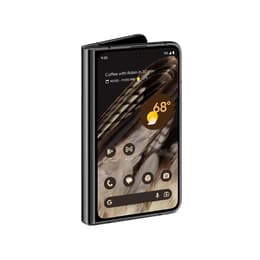
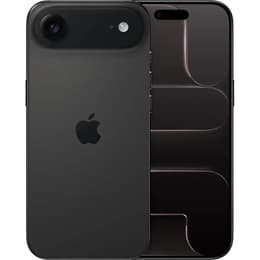
Google Pixel Fold vs iPhone Air
- Záruka 12 mesiacov
- Štandardná doprava zadarmo
- 30 dní bezplatného vrátenia
Prehľad rozdielov
The Google Pixel Fold (2023) and the iPhone Air (2025) represent two distinct approaches to modern mobile engineering, contrasting a book-style folding device with an ultra-slim slate smartphone. While both handsets target users seeking expansive screen real estate in a portable form factor, they achieve this through completely different physical designs and operating systems. The Google Pixel Fold runs on Android, while the iPhone Air operates on iOS, offering two unique software ecosystems suited to different daily workflows.
Dostupné modely
Farba
Úložisko
Výsledky
Odolnosť
Both smartphones provide solid long-term usability, though their release years and hardware structures create different expectations for wear and tear over time.
- Release timeline and support: The iPhone Air launched in late 2025 with an extensive software update window, whereas the Google Pixel Fold debuted in mid-2023, giving the Apple device a more extended future support horizon.
- Durability factors: The iPhone Air utilizes a rigid titanium frame and reinforced glass designed to withstand daily pocket carry, while the Pixel Fold relies on a complex folding hinge mechanism that requires mindful handling of its flexible inner screen.
- Practical lifespan: Users can expect both devices to remain functional for years, though standard slate designs generally encounter fewer mechanical points of failure than folding alternatives.
Rok vydania
2023
2025
Výkon
Underneath their distinct exteriors, both models handle everyday demands smoothly, though their approach to hardware allocation and battery management differs.
- Multitasking and storage: Both options offer generous internal storage configurations starting at 256 GB paired with ample memory capacity, ensuring demanding applications and background processes run without noticeable stuttering.
- Battery behavior: The Pixel Fold houses a larger physical battery to support its dual-screen setup, whereas the streamlined profile of the iPhone Air prioritizes energy efficiency to sustain a full day of mixed use.
- System responsiveness: App loading times, web browsing, and graphics-heavy tasks execute rapidly on both operating systems, providing a fluid user experience during intensive daily routines.
Kvalita obrazovky
Visual output is a primary differentiator between these two models, directly shaping how users consume media, read documents, and interact with applications.
- Display technology: The Pixel Fold features an outer screen alongside a tablet-sized inner OLED panel that unfolds for expansive viewing, while the iPhone Air provides a single, highly vibrant 6.5-inch OLED display.
- Clarity and brightness: Both devices deliver sharp resolutions and high peak brightness levels, ensuring text remains legible and colors appear vivid even under direct sunlight outdoors.
- Refresh rate smoothness: Each model supports a rapid 120 Hz refresh rate, resulting in fluid scrolling animations and responsive touch feedback across all menus and supported applications.
Audiovizuálne
Imaging hardware and media playback capabilities cater to different creative preferences, balancing versatile multi-lens arrays with streamlined single-sensor efficiency.
- Camera systems: The Pixel Fold incorporates a flexible triple-lens rear array featuring wide, ultra-wide, and telephoto options, whereas the iPhone Air focuses on a high-resolution single main sensor paired with advanced computational photography tools.
- Video and low light: Both handsets capture crisp video footage and sharp low-light photographs, though users exploring a quality-assured refurbished option from Back Market often appreciate the distinct creative flexibility offered by foldable tabletop camera modes.
- Audio output: Speaker clarity supports casual media streaming and hands-free calls effectively on both devices, though their physical dimensions yield slightly different acoustic profiles.
Rôzne
Physical dimensions and connectivity standards define how comfortably each phone integrates into daily travel and professional routines.
- Build and handling: The iPhone Air emphasizes an exceptionally thin and lightweight profile at 165 grams, whereas the Pixel Fold has a heavier, dual-body construction weighing 283 grams due to its folding architecture.
- Connectivity and ports: Both smartphones support modern 5G networks, fast Wi-Fi standards, and reliable Bluetooth connectivity, utilizing reversible USB-C ports for charging and data transfer.
- Security features: The Pixel Fold integrates physical fingerprint recognition alongside face unlock, while the iPhone Air relies exclusively on advanced facial recognition technology for secure authentication.
Veľkosť obrazovky
7.6
6.5
Sieť
5G
5G
Karta SIM
Fyzická karta SIM + eSIM
eSIM
Blokovanie na operátora
Neblokovaný
Neblokovaný
Konektor
USB-C
USB-C
Čo si myslí komunita
User discussions across online communities highlight distinct preferences for each device based on individual daily habits. Owners of the Google Pixel Fold frequently praise the versatility of the large inner screen for multitasking and split-screen app usage, though some note the heavier weight and visible screen crease as trade-offs. Conversely, users favor the iPhone Air for its remarkably lightweight, pocket-friendly titanium build and seamless integration within the Apple ecosystem, while noting that its ultra-thin frame leaves less room for extended battery margins during heavy usage.
Users prioritizing maximum screen workspace for reading and multitasking will find the Google Pixel Fold well-suited to their needs, while users prioritizing a lightweight, ultra-slim profile for easy pocketability may lean toward the iPhone Air. Choosing between them depends entirely on whether physical minimalism or folding versatility matters more to your routine. For buyers seeking a sustainable choice, exploring a quality-assured refurbished option provides an eco-friendly alternative to experience these distinct form factors.