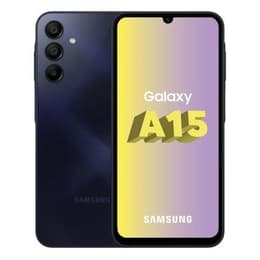



Galaxy A15 vs Xiaomi Redmi Note 11

Galaxy A15
Galaxy A15
Od

Cena za repasovaný kus:128,00 €

V porovnaní s 265,32 € za nový

Zobraziť možnosti
Xiaomi Redmi Note 11
Od

Cena za repasovaný kus:111,00 €

V porovnaní s 199,00 € za nový

Zobraziť možnosti

Hodnotenia

Samsung Galaxy A15, released in late 2023, and the Xiaomi Redmi Note 11, launched in early 2022, are both smartphones designed for everyday use. While both devices offer a similar core experience with Android as their operating system, the Galaxy A15 benefits from a more recent release, bringing with it an extended software support timeline and 5G connectivity in its primary variant, whereas the Redmi Note 11 focuses on a robust display and faster charging for its time.

Výsledky

Odolnosť

The practical lifespan of a smartphone is significantly influenced by its release timeline and the manufacturer's commitment to software updates. These two models present different expectations in this regard.

  • Release Timeline: The Samsung Galaxy A15 was released in December 2023, making it a more recent device compared to the Xiaomi Redmi Note 11, which launched internationally in January 2022. This difference in release dates impacts their respective support cycles.
  • Software Longevity: Samsung has committed to providing four years of Android system updates and five years of security updates for the Galaxy A15. This offers a longer period of software relevance and security patches. In contrast, the Redmi Note 11, running on Android 11 at launch, has a more limited update promise, typically receiving fewer major Android version upgrades and security updates compared to the A15.
  • Repairability: While specific repairability scores can vary, both devices are generally constructed with plastic frames and backs, which can offer some resilience to minor impacts. The Redmi Note 11 does feature an IP53 rating for dust and splash resistance, providing a degree of protection that the Galaxy A15 lacks.

Rok vydania

2023

2022

Kompatibilný/Kompatibilita s najnovšími aktualizáciami

Áno

Nie

Operačný systém

Android

Android

Sklopný

Nie

Nie

Výkon

When evaluating performance, both smartphones are designed to handle daily tasks efficiently, though they approach this with different internal components and offer varying levels of responsiveness.

  • Processor Capabilities: The Samsung Galaxy A15 (5G variant) is equipped with a MediaTek Dimensity 6100+ processor, while the 4G variant uses a MediaTek Helio G99. The Xiaomi Redmi Note 11 features a Qualcomm Snapdragon 680 4G processor. For everyday activities like web browsing, social media, and light applications, both devices offer adequate performance. The A15's Dimensity 6100+ generally provides a slightly more responsive experience, particularly in the 5G variant, and handles multitasking with a bit more fluidity.
  • Multitasking and Responsiveness: Users of the Galaxy A15 report that it handles demanding apps and multitasking smoothly, though some minor lag might occur when switching between many applications. The Redmi Note 11 also performs well for general use, but some users have noted occasional sluggishness, especially with numerous apps running in the background or during more intensive tasks.
  • Storage and RAM: Both models typically come with 4GB or 6GB of RAM and 64GB or 128GB of internal storage, with options for expansion via a microSD card. The Galaxy A15 often starts with 128GB of storage, which is a welcome upgrade over some predecessors.

Pamäť (GB)

4 GB

4 GB

Kvalita obrazovky

The visual experience on a smartphone is largely defined by its display, and both the Galaxy A15 and Redmi Note 11 offer vibrant screens with smooth refresh rates.

  • Display Technology and Clarity: Both devices feature AMOLED displays, which are known for producing deep blacks and vibrant colors. The Samsung Galaxy A15 has a 6.5-inch Super AMOLED screen, while the Xiaomi Redmi Note 11 sports a 6.43-inch AMOLED panel. Both offer Full HD+ resolution (2340 x 1080 pixels for A15, 2400 x 1080 pixels for Note 11), ensuring sharp visuals for typical viewing distances.
  • Brightness and Refresh Rate: Both phones feature a 90Hz refresh rate, contributing to smoother scrolling and animations. The Galaxy A15 offers a maximum brightness of 800 nits, making it quite legible in bright outdoor conditions. The Redmi Note 11 also provides good brightness, with typical levels around 700 nits and peak brightness reaching up to 1000 nits, ensuring visibility even under direct sunlight.
  • Viewing Experience: The A15's display is praised for its overall quality and vibrant output, making media consumption enjoyable. The Redmi Note 11's AMOLED screen is also a strong point, offering excellent color reproduction and contrast for its category.

Rozlíšenie

1080 x 2340

1080 x 2400

Typ obrazovky

Super AMOLED

AMOLED

Audiovizuálne

For many users, camera capabilities are a significant factor, and both the Galaxy A15 and Redmi Note 11 provide multi-lens setups for varied photography.

  • Rear Camera System: The Samsung Galaxy A15 features a triple camera setup with a 50MP main sensor, a 5MP ultrawide lens, and a 2MP macro lens. The Xiaomi Redmi Note 11 comes with a quad-camera system, including a 50MP main sensor, an 8MP ultrawide lens, a 2MP macro lens, and a 2MP depth sensor. The Redmi Note 11's ultrawide camera offers a slightly wider field of view.
  • Photography Performance: In good lighting, both phones capture detailed images with decent color reproduction from their main sensors. The Galaxy A15's main camera produces sharp details, though colors can appear slightly oversaturated. The Redmi Note 11 also performs adequately in well-lit conditions, but its low-light performance can be challenging, with noticeable noise. Neither phone is noted for exceptional low-light photography.
  • Video Recording and Front Camera: Both devices support video recording up to 1080p at 30 frames per second. The Galaxy A15 has a 13MP front-facing camera, similar to the Redmi Note 11's 13MP selfie camera. Both are suitable for video calls and casual selfies, with the A15's selfie camera preserving a fair amount of detail.

Hlavný fotoaparát

50 megapixels

50 megapixels

Predná kamera

13 megapixels

13 megapixels

Rôzne

Beyond core features, several practical elements contribute to the overall user experience and daily convenience of these smartphones.

  • Connectivity and Ports: The Samsung Galaxy A15 (5G variant) supports 5G connectivity, offering faster mobile data speeds where available, while the Xiaomi Redmi Note 11 is limited to 4G LTE. Both devices include Wi-Fi, Bluetooth, a USB-C port for charging and data transfer, and a 3.5mm headphone jack. The Redmi Note 11 also uniquely features an infrared (IR) blaster, allowing it to function as a universal remote control.
  • Build Materials and Handling: Both smartphones feature a primarily plastic construction for their back panels and frames. The Galaxy A15 has a design that feels sturdy, though some reviews note its reflective plastic finish can attract dust. The Redmi Note 11 also offers a sturdy build with a smooth plastic finish that can be prone to smudging. The Redmi Note 11 is slightly lighter at 179g compared to the A15's 200g.
  • Security and Audio: Both phones incorporate a side-mounted fingerprint sensor for secure unlocking. For audio, the Redmi Note 11 stands out with stereo speakers, providing a more immersive sound experience for media consumption. The Galaxy A15, in contrast, features a single mono speaker.

Hmotnosť

200 g

179 g

Veľkosť obrazovky

6.5

6.43

Sieť

4G

4G

Karta SIM

Fyzická karta SIM

Duálna fyzická karta SIM

Blokovanie na operátora

Neblokovaný

Neblokovaný

The Samsung Galaxy A15 and Xiaomi Redmi Note 11 cater to users seeking reliable smartphone functionality without advanced flagship features. The Galaxy A15 is often praised for its vibrant AMOLED display, extended software support, and solid battery life, making it a dependable choice for long-term use. However, some users have noted its performance can be occasionally sluggish, and the lack of an IP rating is a consideration.

The Redmi Note 11 receives commendation for its excellent AMOLED screen with a 90Hz refresh rate, impressive battery life, and the inclusion of stereo speakers and an IR blaster. Criticisms often point to its limited software update policy, average camera performance in challenging conditions, and the absence of 5G connectivity.

Users prioritizing a longer software support timeline and 5G connectivity will find the Samsung Galaxy A15 well-suited to their needs. Those who value a slightly more immersive audio experience, faster charging with an included charger, and a degree of dust and splash resistance might lean towards the Xiaomi Redmi Note 11. Both devices represent quality-assured refurbished options for consumers looking for sustainable choices in the smartphone market. Ultimately, the decision depends on which specific features align best with individual usage patterns and priorities.


Objavte všetky články

Naše nedávne porovnania